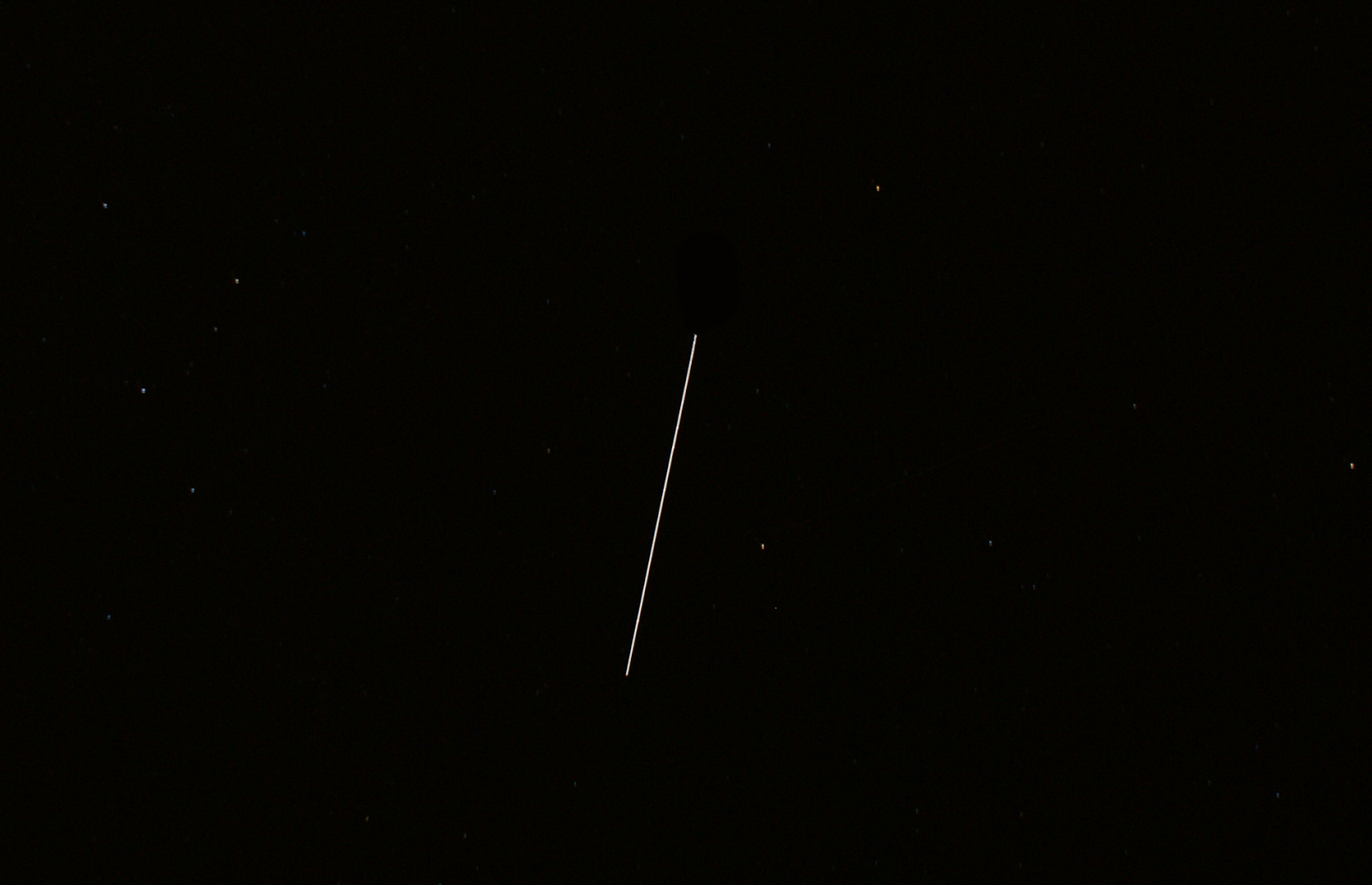
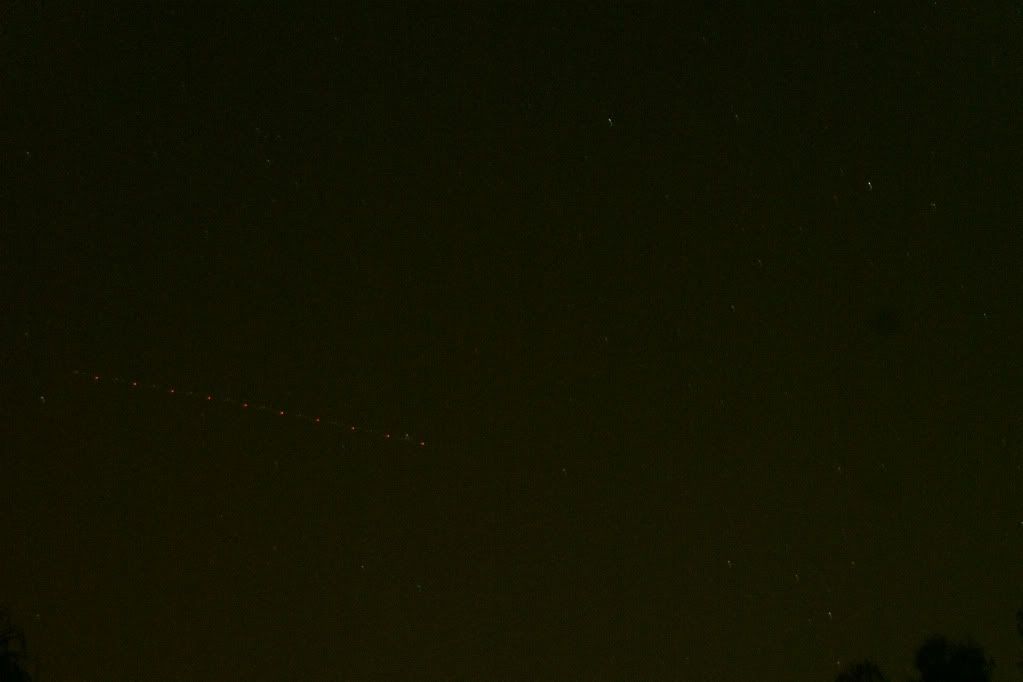
All images are 15 sec., ISO 400. Processed in Photoshop CS6.
10 December 2012
ISS Passover
The International Space Station passed over earlier this evening. I got some wide field images, it leaves trails. It was my first time ever seeing the ISS pass over. It started out dim in the SW, then got really bright as it passed overhead. It got dimmer as it retreated in the NE. Seeing the ISS was a great experience.
23 November 2012
Pictures from Tonight
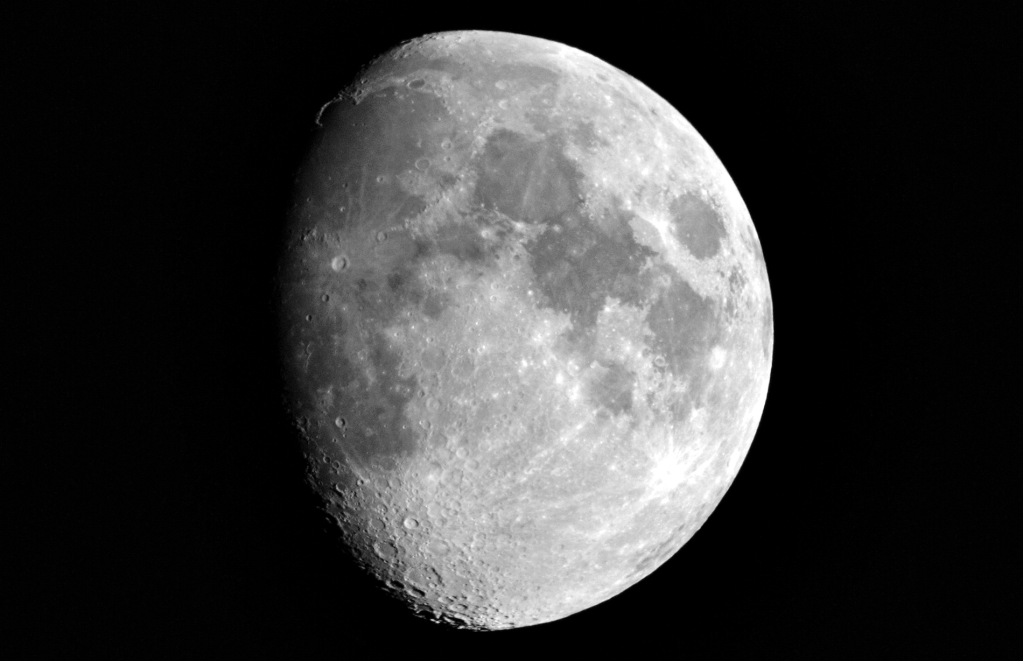
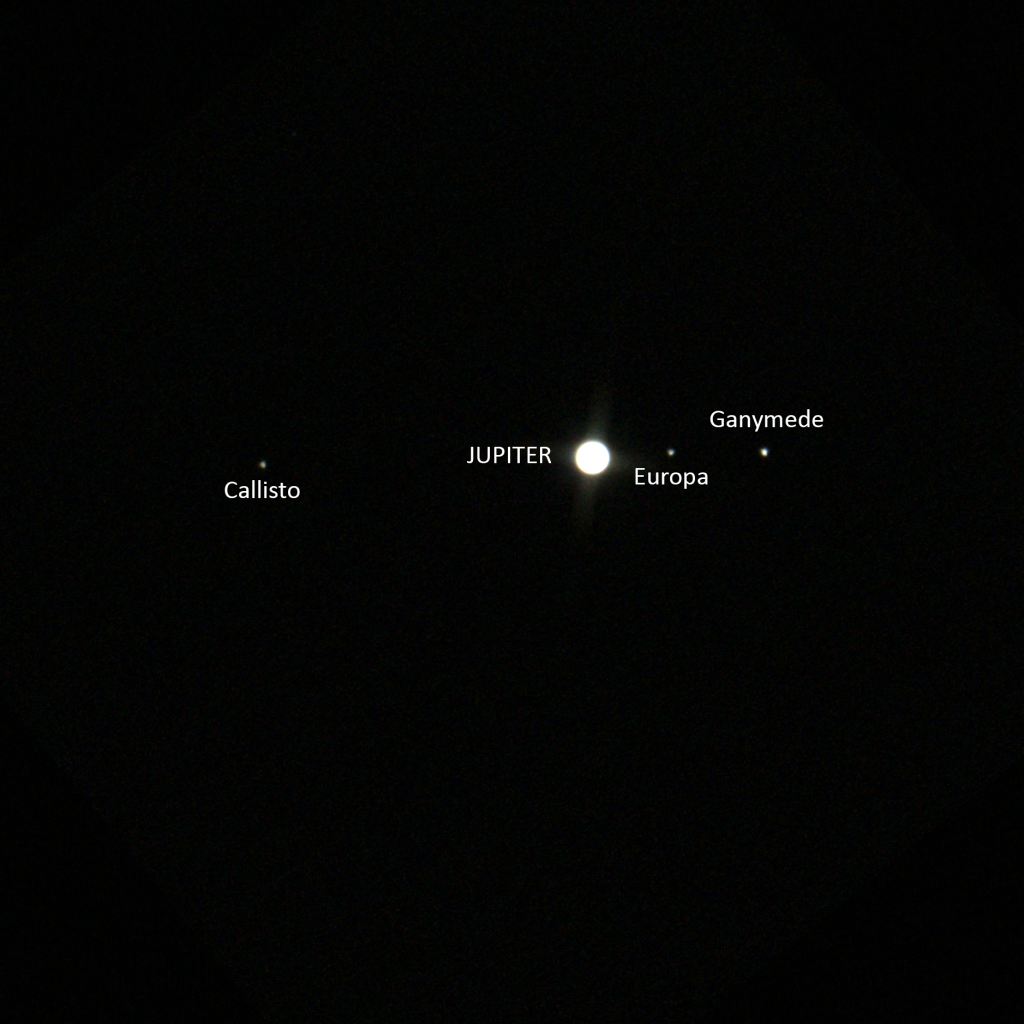
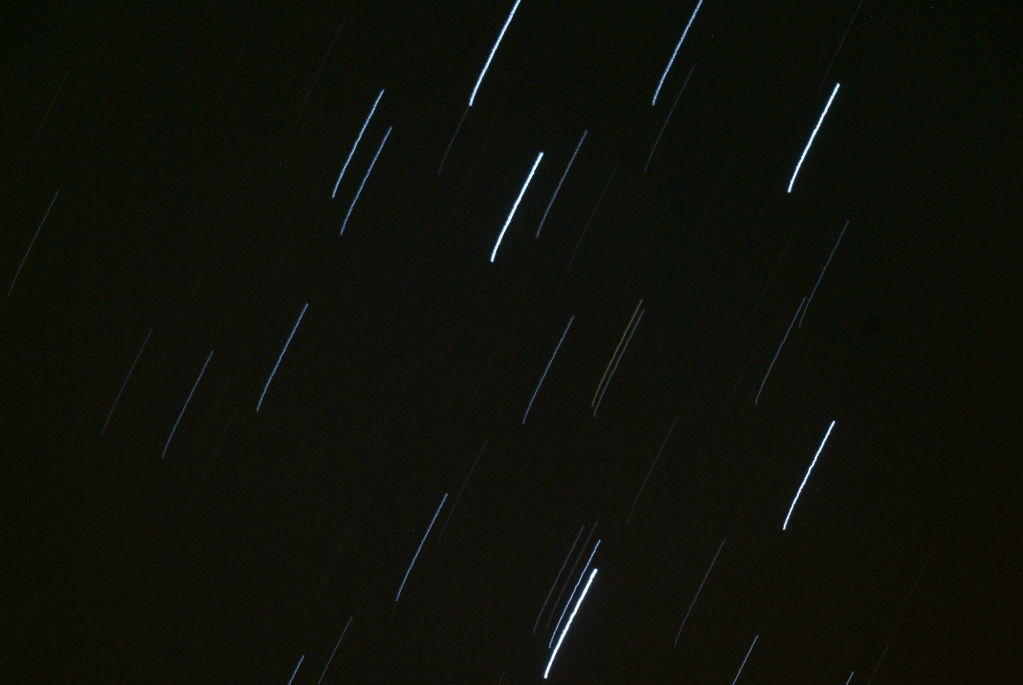
Here's some pictures through my scope tonight. It was a good, clear night. I focused on imaging because the Waxing Gibbous makes it hard for DSO's.
83% Waxing Gibbous - 1/640., ISO 200
Jupiter and moons - 1/4., ISO 800
Pleiades Star Trail - 30 sec., ISO 800
19 November 2012
Observing Report: High Powered Viewing + Moon
Tonight was a great night! I went out at 7:45 and did 30 minutes of Lunar observing. Transparency was poor but seeing was good. I saw the Apollo 11 landing sight close up at 250x with my new adjustment ring. I also saw Armstrong, Collins, and Aldrin craters. I used Turn Left at Orion for narrowing in on spots on the moon. The moon is still one of my favorite objects to observe. I then turned to Jupiter, one of the best views I’ve ever gotten out of the planet. It looked great at 250x. The Great Red Spot and four of Jupiter’s moons were clearly visible, and cloud belts were easily seen. I was going to wait another half an hour for Orion to rise above the trees, but things started dewing up and my telescope was soaking wet. Tonight was fun and I can’t wait for later this winter.
Here's tonight's picture of the moon. 1/500 sec., ISO 400.
12 November 2012
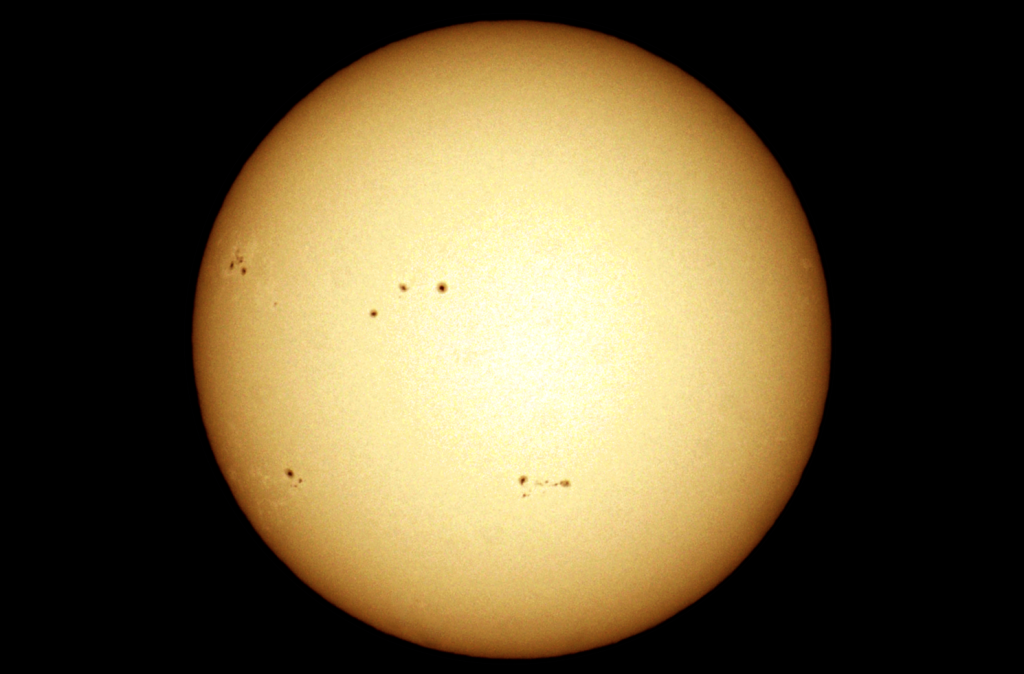
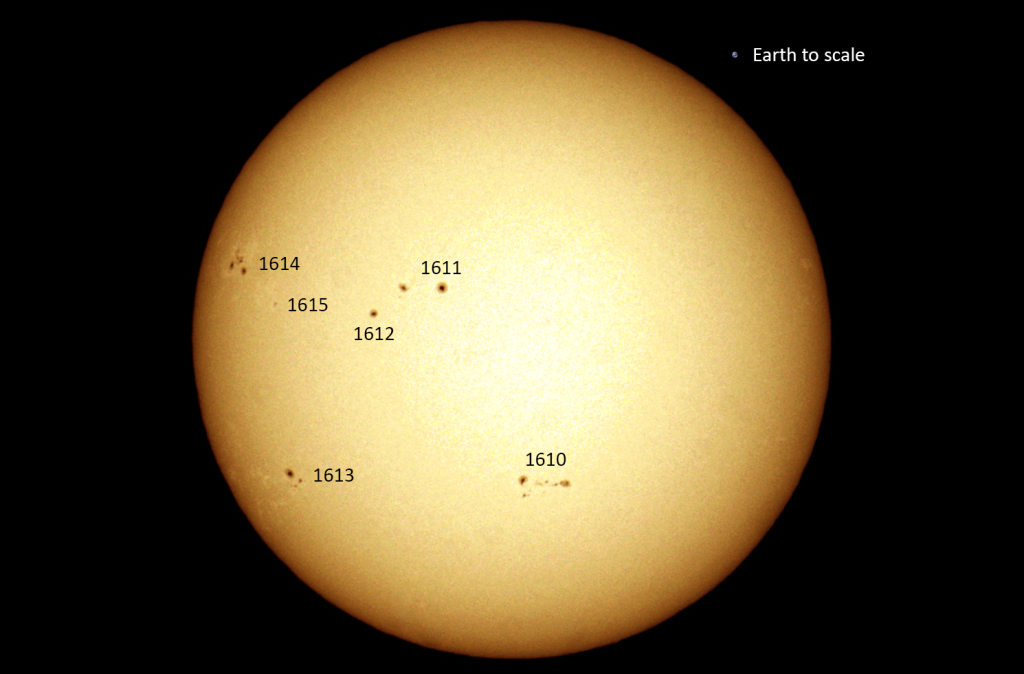
Sun: November 12, 2012
Here's today's sun. A lot of sunspots are visible. Single shot, 1/1250 sec., ISO 200. Processed in Photoshop CS6.
11 November 2012
Observing Report: A Bad Night Out
Tonight was a bust. Conditions weren’t great, and it was very cold and dry. I looked forward to a good night, having 12 objects on my list. I only ended up observing 3 of them. The only positive thing about tonight was the fact that I observed M76, The Little Dumbbell Nebula. Conditions weren’t good enough for M33, M74, and some other Messiers. On top of all that, I misaligned my finder scope at the end of the night. Hopefully next session will be better. On the bright side though, I am buying a high powered planetary eyepiece tomorrow.
M76 The Little Dumbbell Nebula
05 November 2012
Observing Report: M33 Triangulum Galaxy
Tonight was an amazing night. I went out at 7:30pm. This is my first time observing since the time change; it’s getting dark around 5:30pm now, which is great. I had one simple goal for tonight: observe the Triangulum Galaxy (M33). I used my SkyandTelescope pocket atlas for the first time. I like it but I have to get used to it. Mobile sky maps are easier to read for me right now. This was also the first night I listened to music while observing. The song is The Far River by John Sierre. Hubblesite’s Tonights Sky videos use that music. It is relaxing and awe inspiring, really complementary to observing. Seeing and transparency were both above average. I could pick out magnitude 4.8 stars with my naked eye. I got sidetracked in Cassiopeia at first, finding a few NGC open clusters with the Pocket Atlas. I revisited M103, nothing special. Then I moved on to my goal, the Triangulum Galaxy. I used Sky Safari Plus as my guide. The Sky map is really good. I searched for 5 minutes with no luck. Then I slowly went through the area it was supposed to be in. I saw a very faint, large smudge! I moved it around the eyepiece to make sure I wasn’t just seeing things and sure enough, it was M33! I looked through the Tel-Rad and confirmed it’s position in the sky. I can’t believe I found it in an orange zone on the bortle scale. I spent 10 minutes gazing at it. Thinking about how their could be intelligent life there looking at our own Milky Way Galaxy. The music added a nice effect to it also. I wrapped up the night at 9:15pm, looking at Jupiter, it’s four moons in a straight line, and the Great Red Spot. The GRS transited across the center of the planet at 8:15pm, but getting earlier each day. Tonight was my last chance to see it for a couple of weeks.
I did not take this picture.
M33 Triangulum Galaxy
02 November 2012
Observing Report + Lots of Wide-field Images
I went out for an hour tonight, and was well rewarded. At 9:00pm it is finally dark, but the moon rises close to 10 so I didn’t have much time for DSO’s. Transparency was poor, but seeing was good. I had four objects on my list tonight. I ended up getting distracted and only observing two of them, while adding another to the list. I was going to go for M75 and the Saturn Nebula, but I got sidetracked in the Summer Triangle. I planned on observing the Ring Nebula, but the Double Double, a four star system, caught my attention. It is in the constellation Lyra, near Vega. There are two stars close to each other, each with a companion with separations of 2.3 and 2.8 arc seconds. I was able to barely split these four stars at 150x, and I was excited. By the time I was ready to continue to the list, M75 and the Saturn Nebula were too low in the skyglow. The last two objects were M2 and Jupiter. I easily found and observed M2, and then moved on to Jupiter. It is still low in the East, but seeing was good and I was impressed with the view. The GRS was just coming around the limb of the planet. I was able to see Io, Callisto, and Ganymede. Europa was behind the planet. I need a high powered eyepiece. I spent the last 20 minutes taking some wide-field shots of Jupiter, the Pleiades, Cassiopeia, and the Summer Triangle. Nothing new tonight except the Double Double binary star system, but it was a fun night of observing.
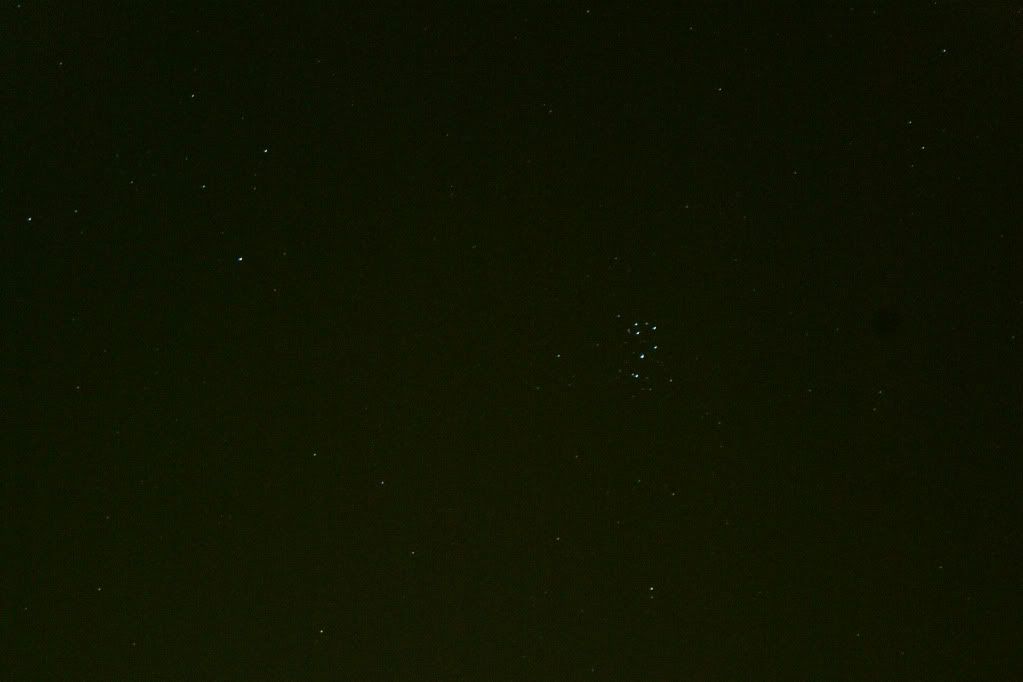
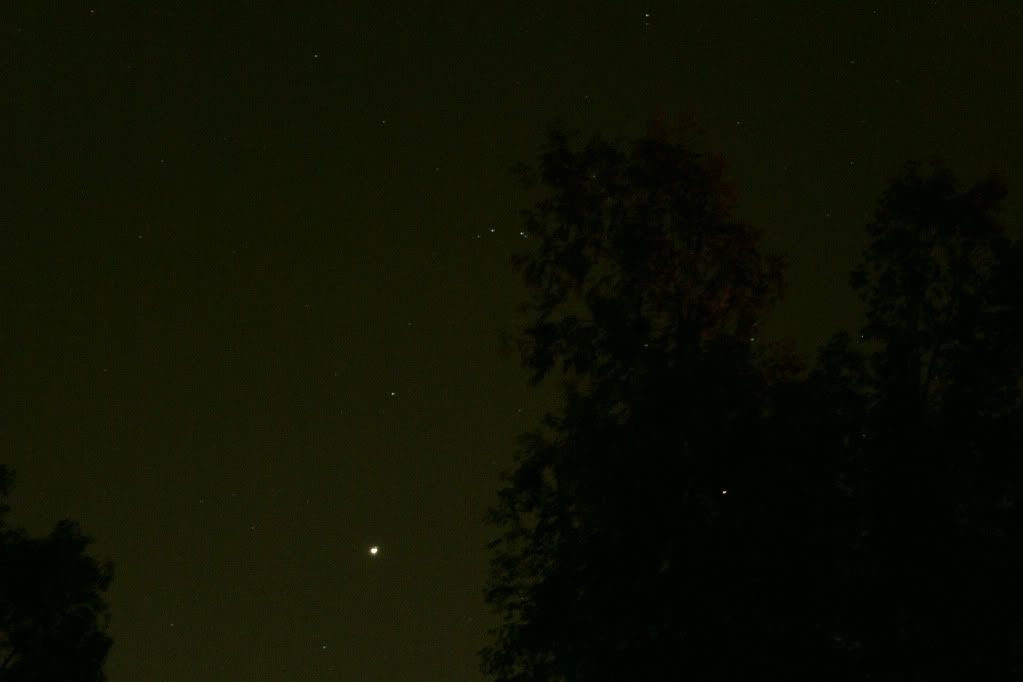
Here's some of the wide-field images from tonight. All of them were 10 second exposures, ISO 400.
Pleiades
Jupiter and Aldebaran between the tree
Summer Triangle
Cassiopeia
Airplane streaks
Subscribe to:
Posts (Atom)